Child Development
Early childhood care, nutrition, education, protection and child rights — the programmes through which the Ministry of Women and Child Development discharges its responsibility for children, and how they fit together.
From before birth to adolescence
The Ministry’s programmes for children are organised around stages of development, with the Anganwadi Centre as the principal point of delivery in the community.
Maternal and infant support
Nutritional support for pregnant women and lactating mothers, health check-ups, immunisation linkage and maternity benefit under Pradhan Mantri Matru Vandana Yojana.
Saksham Anganwadi & POSHAN 2.0 · Mission ShaktiNutrition and growth monitoring
Supplementary nutrition, home rations, growth measurement and the tracking of stunting, wasting and underweight prevalence. Crèche support for children of working mothers through Palna.
Saksham Anganwadi & POSHAN 2.0 · PalnaEarly childhood care and education
Pre-school education at the Anganwadi Centre alongside continued nutritional support — one of three primary sub-verticals of Mission Poshan 2.0, and the foundation for school readiness.
Early Childhood Care & EducationProtection, care and adolescent support
Support for children in need of care and protection through Mission Vatsalya, and nutritional support for adolescent girls aged 14 to 18 in aspirational districts and all districts of the North East.
Mission Vatsalya · Nutrition for Adolescent GirlsMission Vatsalya
Mission Vatsalya subsumed the Integrated Child Protection Scheme. It supports children in need of care and in difficult circumstances, universally across the country, and develops context-based solutions for children from varied backgrounds.
Child Care Institutions
Established under the scheme, they provide age-appropriate education, access to vocational training, recreation, health care and counselling for children in their care.
Statutory bodies
Child Welfare Committees and Juvenile Justice Boards operate under the juvenile justice framework at district level. Vacancies in these bodies have been a recorded subject of ministerial review with State governments.
Convergent action
The mission provides for gap funding where required and for green-field projects encouraging innovative solutions, drawing together action across departments.
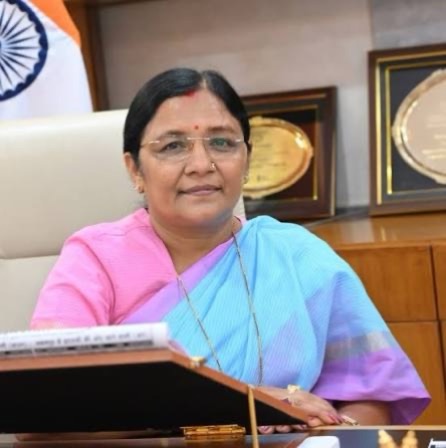
On 7 November 2025 the Ministry recorded a visit to Jiribam district, Manipur, including the One Stop Centre at Chingdong Leikai and two Child Care Institutions — Lairembi Sanglen and Gulamchat at Patchao. The release records that the Minister reviewed facilities, interacted with women and children, and directed the District Child Protection Officer to ensure regular health check-ups, nutritious meals and yoga sessions, while enquiring about breakfast menus, sports activities and school attendance.
Source: Press Information Bureau, Imphal, 7 November 2025.
The Anganwadi Centre
The Anganwadi Centre is the point at which almost all of this reaches a child. It is the community-level facility through which supplementary nutrition, pre-school education, growth monitoring, health referral and counselling are delivered.
Mission Poshan 2.0 is described by the Ministry as a flagship nutrition programme of the Government of India and one of the world’s largest programmes for early childhood care and development. It seeks to address malnutrition through transparency, accountability, diet diversity and quality, food fortification, greater grassroots involvement and last-mile delivery of services.
Following a visit to the Anganwadi Centre at Sethi Nagar, Indore, on 17 June 2025, the Ministry recorded that the Minister highlighted how the transformation of Anganwadi infrastructure, the introduction of digital tools including Poshan Tracker, and the training of frontline workers have made Anganwadi Centres more responsive in delivering essential services.
The quantitative picture — how many centres, how many beneficiaries, and what the nutrition indicators show — is set out with full provenance on the Nutrition & Wellbeing page.
Number of Anganwadi Centres registered on the Poshan Tracker application.
- Source
- Press Information Bureau / Ministry of Women and Child Development
- Year
- As on 17 September 2025
- Geography
- India — all States and Union Territories
- Context
- Registration on the tracker, not a count of operational capacity or attendance.
Eligible beneficiaries registered on the Poshan Tracker application on the same date.
- Source
- Press Information Bureau / Ministry of Women and Child Development
- Year
- As on 17 September 2025
- Geography
- India — all States and Union Territories
- Context
- Covers children under six, pregnant women, lactating mothers and adolescent girls in covered districts. Registration counts vary between reporting dates.
Date from which the Poshan Tracker information system was rolled out to monitor Mission Poshan 2.0 on a near real-time basis.
- Source
- Ministry of Women and Child Development
- Year
- 2021
- Geography
- India
- Context
- An ICT governance tool for last-mile tracking of nutrition service delivery and dynamic identification of stunting, wasting and underweight prevalence.
Mission Vatsalya, Saksham Anganwadi & POSHAN 2.0, Palna and the Child Helpline are programmes and services of the Government of India. They were not created by Smt. Savitri Thakur, and no such claim is made. Activity attributed to her by name on this page — the Indore and Jiribam visits — carries its date and its source.