Smt. Savitri Thakur · Public Record Dhar, Madhya Pradesh · India
05 — Documented Activity

Social Work

What official institutional sources record about work with women in tribal communities — training, self-help groups and financial empowerment — set out exactly as documented, with the source of each statement identified.

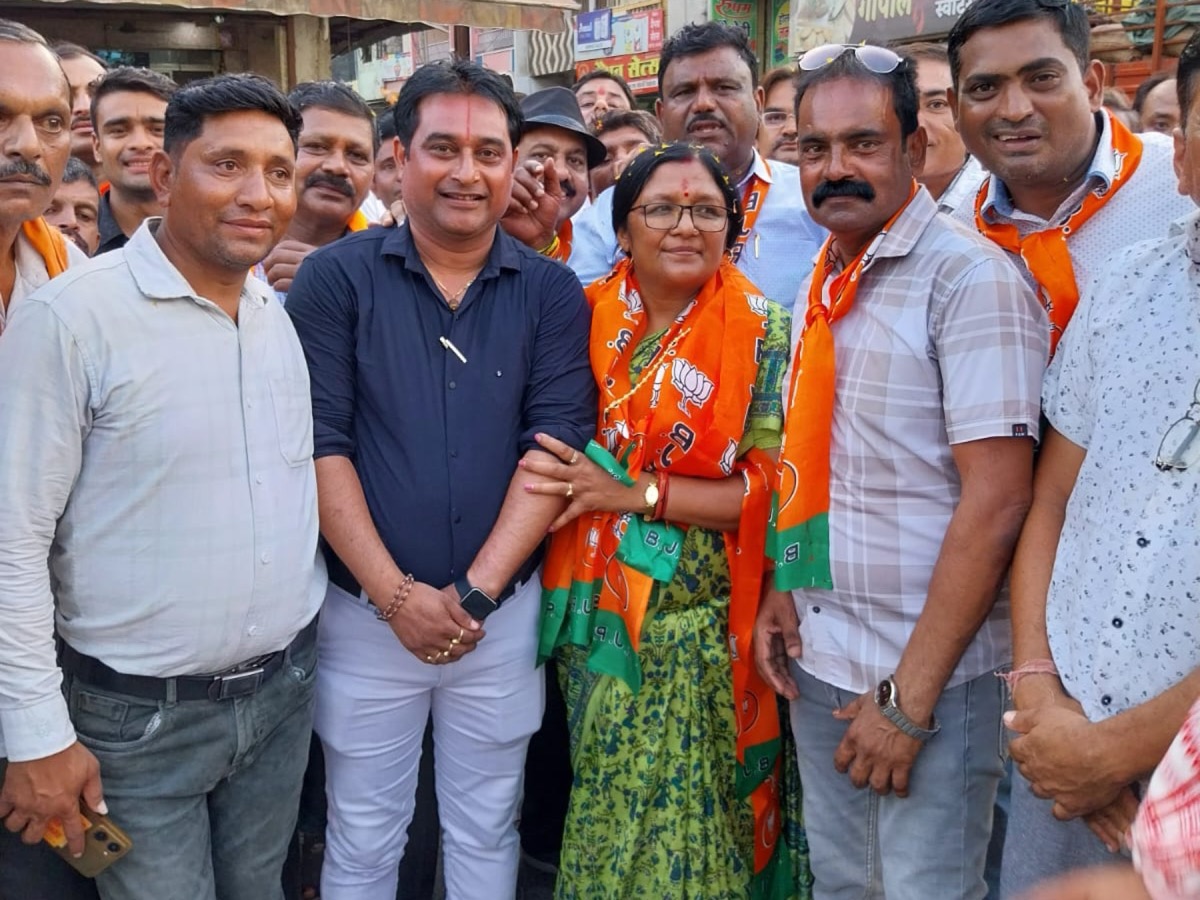
Smt. Savitri Thakur standing among a group of people on a street in Dhar, Madhya Pradesh.
Smt. Savitri Thakur with residents during a public interaction in Dhar, Madhya Pradesh. Photograph — public event image
The Source Statement
“She has organized job-oriented training programmes for tribal women, created self-help groups, and enabled their financial empowerment, significantly contributing to their socio-economic upliftment.”
Source · Profile of Smt. Savitri Thakur, Minister of State
National Commission for Protection of Child Rights; the same description appears on the Savitribai Phule National Institute of Women and Child Development, Ministry of Women and Child Development

That sentence is the whole of what the official record states about this work. The sections below set out the institutional context in which such activity takes place — what a self-help group is, what job-oriented training means, and why tribal women in western Madhya Pradesh are a distinct focus for it — without extending the claim beyond the source.

Context
Documented Activity

Women in tribal communities

Dhar district recorded a Scheduled Tribe population of 1,222,814 at the 2011 Census of India — 55.94 per cent of the district total. Of these, 1,142,263 lived in rural areas. Tribal women in such districts have historically recorded lower levels of literacy, formal employment and access to institutional finance than State and national averages.

The recorded social work is directed at this population: women in tribal villages of a district where they form the demographic majority.

Census of India 2011 · Dhar district
What the term means

Job-oriented training programmes

Job-oriented or vocational training programmes are short-duration courses designed to equip participants with a specific marketable skill, rather than general education. In rural and tribal districts these commonly cover tailoring and garment work, food processing, handicraft and handloom production, dairying and allied agricultural activity, and basic enterprise and financial literacy.

The public record states that such programmes were organised for tribal women. It does not identify the trades, the number of participants, or the locations, and none are stated here.

What the term means

Self-help groups

A self-help group is a small voluntary association, typically of ten to twenty women from the same locality, who pool regular savings into a common fund and lend from it to members. Once a group establishes a savings and repayment record, it may be linked to a bank for larger credit — the mechanism known in India as SHG–bank linkage.

The model matters in tribal districts because it creates a route to institutional credit for women who hold no collateral and have no individual banking history. It also functions as a collective forum, which is why self-help groups are frequently used as the delivery point for health, nutrition and rights awareness work.

The record states that self-help groups were created and that this enabled financial empowerment. The number of groups, their membership and their credit volumes are not documented in the public record.

Government context

Where this sits in policy

Self-help groups and women’s economic participation are long-standing instruments of Indian rural development policy, operating through State rural livelihood missions and, for women and child development specifically, through the Samarthya sub-vertical of Mission Shakti.

In a meeting with the Vice-Minister of Social Development of Guatemala in New York in February 2026, the Ministry of Women and Child Development recorded that Smt. Savitri Thakur shared India’s experience with flagship programmes including Self-Help Groups, Direct Benefit Transfer, PM POSHAN school meals and digital public infrastructure.

Press Information Bureau · 5 February 2026
Continuity

From village groups to ministerial review

The same subject matter recurs in her documented ministerial activity. Field visits recorded by the Press Information Bureau include inspection of Anganwadi Centres, One Stop Centres and Child Care Institutions, and review meetings with State governments on the implementation of Mission Shakti, Mission Vatsalya and Saksham Anganwadi & POSHAN 2.0.

These are set out, with dates and sources, on the Parliamentary & Public Work and Media pages.

Boundaries of this page

No named beneficiaries, villages, testimonials or case studies appear on this page. Such material is not present in the verifiable public record, and inventing it — even in illustrative form — would misrepresent both the individual and the women described. The official statement is quoted in full above; everything else on this page is clearly labelled as institutional or demographic context.