Smt. Savitri Thakur · Public Record Dhar, Madhya Pradesh · India
03 — Origins

Early Life & Education

Where Smt. Savitri Thakur was born, the district she comes from, her recorded schooling and the agricultural background that the official record sets against her name.

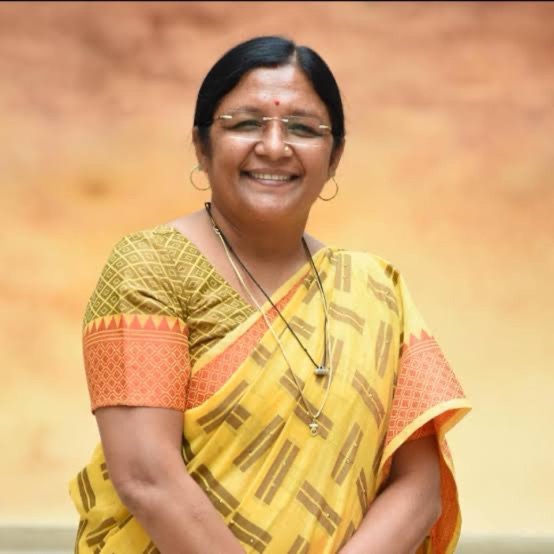
Portrait of Smt. Savitri Thakur in a yellow handwoven sari.
Smt. Savitri Thakur. Public photograph
I

Birth

Smt. Savitri Thakur was born on 1 June 1978 at Kalikiray, a village in Dhar district, Madhya Pradesh. The date and place appear consistently in the Lok Sabha member biography, in the ministerial profile published by the Savitribai Phule National Institute of Women and Child Development, and in the profile carried by the National Commission for Protection of Child Rights.

Source — SPNIWCD, Ministry of Women & Child Development
II

Dhar district

Dhar district lies in the Indore Division of western Madhya Pradesh, covering 8,153 square kilometres. It is bounded by Ratlam to the north, Ujjain to the north-east, Indore to the east, Khargone to the south-east, Barwani to the south, and Jhabua and Alirajpur to the west.

At the 2011 Census of India the district recorded a population of 2,185,793, of whom 55.94 per cent belonged to Scheduled Tribes — among the higher proportions in the State. The recorded literacy rate was 60.57 per cent and the sex ratio 961 females per 1,000 males. The great majority of the Scheduled Tribe population — 1,142,263 of 1,222,814 — lived in rural areas.

These are the conditions in which her early life took place, and they remain the demographic context of the constituency she represents. The district is examined in fuller detail on the Dhar page.

Source — Census of India 2011; District Administration, Dhar
III

Educational background

Her recorded educational qualification is higher secondary. The Lok Sabha member record and the affidavits filed with the Election Commission of India as a candidate describe this as Class 12 — the completion of senior secondary schooling.

The public record does not name the institution attended or the years of study, and neither is stated here. Educational attainment beyond primary level was, at the time, considerably less common among women in the rural and tribal-majority areas of western Madhya Pradesh than the State average — a fact recorded in the Census literacy figures for the district.

Source — Lok Sabha member record; ECI candidate affidavits
IV

Professional background

The official record lists her profession as agriculturist. In Dhar district, agriculture and allied activity are the principal livelihood for the majority of households, and the constituency is predominantly rural in character.

Her later organisational role reflected the same sector: from 2017 to 2020 she served as National Vice President of the Bharatiya Janata Party’s Kisan Morcha, its farmers’ wing.

Source — Lok Sabha member record; NCPCR ministerial profile
V

Early public engagement

The earliest public office recorded against her name is Chairperson of the Zila Panchayat of Dhar, held from 2004 to 2009 — a position reached at the age of about twenty-six. Election to that office is by and from the elected members of the district panchayat.

Institutional sources also record work organising job-oriented training programmes for tribal women and forming self-help groups. The record does not date this work precisely, and no date is assigned to it here.

What this page does not contain

No account of childhood, family circumstances, schooling experiences or formative anecdotes appears here, because no such account exists in the verifiable public record. This page sets out only what official sources state, together with the documented demographic context of the district in which she was born.